

 Josiah
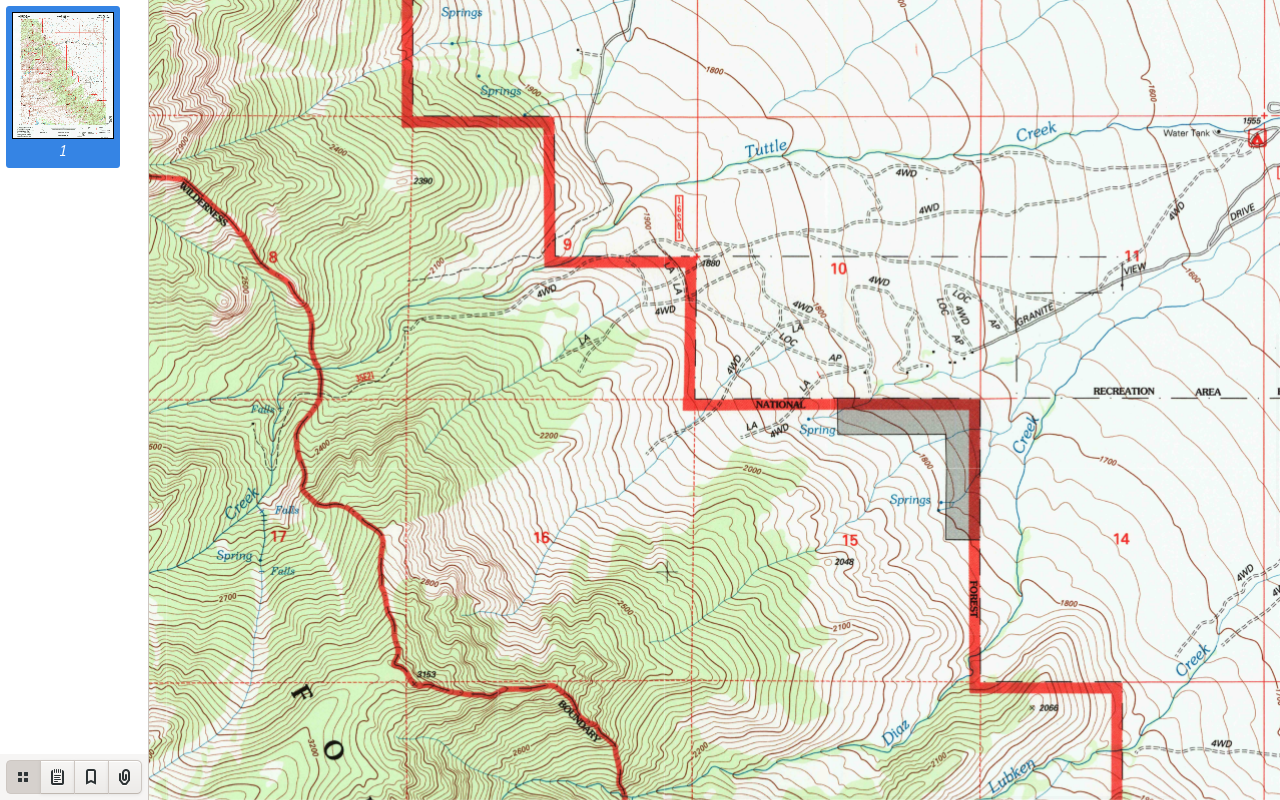
This spring doesn’t have a name, so, “So. Fork of So. Fork of Tuttle Creek” is a description of its location in terms of drainage, in the John Muir Wilderness (within the Inyo National Forest), in the Sierra (aka Sierra Nevada mountains). It appears on the USGS topographic map, “Mt. Langley” at elevation 2,580 meters (8,464 feet). There’s no trail after leaving the trail to the Tuttle Creek Stonehouse (aka Ashram). I’ve been there several times while going to and for the top of Mt. Langley (14,025 feet). This spring is in a long valley which has a trail marked on older topo maps, but, there’s no trail left to follow. Note: There’s an inter-agency visitor’s center south of the town of Lone Pine, CA where you can get a permit to go into the John Muir Wilderness. Have a look at the “17” red box on the 7.5 minute “Mt. Langley” topo map (SCALE 1:24 000). The trail to the Ashram is seen, with a black dot for the structure at the end. The map says “Tuttle Creek,” however, to avoid confusion, I’ve called it “South Fork Tuttle Creek” since it joins a north fork that is just as long as the “south fork.” On the same map, “North Fork Lubken” and “South Fork Lubken” are labelled. At 2,400 meters, the So. Fork of So. Fork joins the main So. Fork. Going uphill (going south), this spring is labelled “Spring” next to “Falls” (there are three “Falls” in box 17). Why am I giving such a level of detail? Because, you do NOT want to get lost going to, or returning from, this spring. The terrain is very steep. Visibility is very limited. The brush is very dense. It’s logical to find the junction of So. Fork and “So. Fork of So. Fork” and take the side fork, but it’s not practical since one must choose which side and find the easiest route. Eventually, you will find a genuine “spring” gushing out of a “hole” in the ground. It’s very distinct. Uphill, there’s no water (the “spring” is created by an underground stream). Downhill, there’s a fast-running stream. If you do not have several years of wilderness travel (no trail), I suggest breaking the trip up into two segments over two days. Look up the weather forecast at: weather.gov. On the first day, visit the Ashram, then go back to your vehicle. On day 2, you will be relaxed and confident upon reaching the bridge over So. Fork Tuttle. Don’t go right which is the trail to the Ashram, go left….. and bushwack to the spring. Make this left in the morning, not the afternoon, unless it’s summer. If it’s not summer, when the sun starts setting, it gets cold and dark FAST because of the depth of the Tuttle drainage (it’s in the Eastern Sierra, the second steepest escarpment in the lower-48). If you have a lot of mountaineering experience, it’s a piece of cake. (Enjoy!)
How to Collect Spring Water

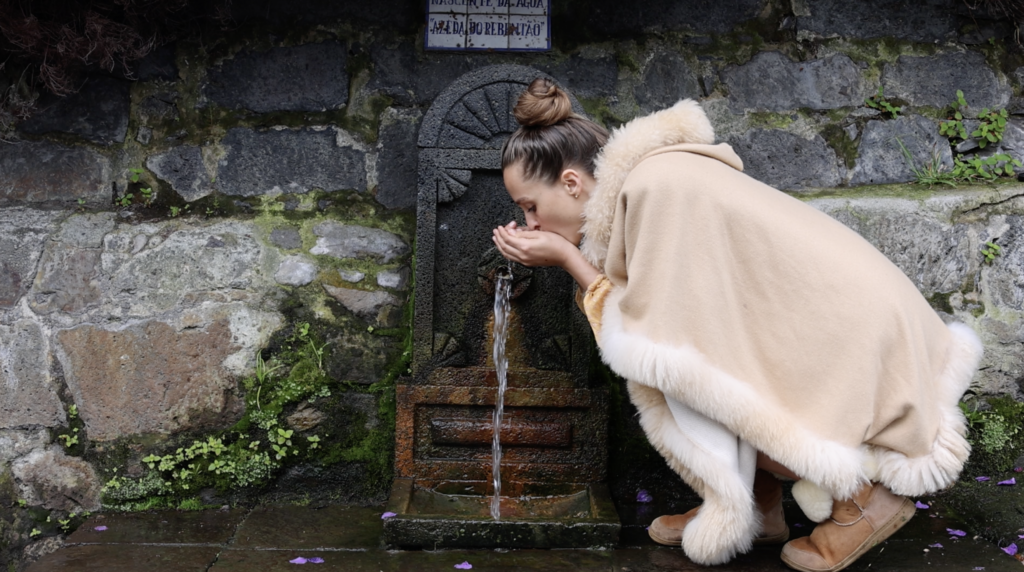
Drinking pure spring water is one of the most important things we can do for our health. Our bodies are over 99% water at the molecular level, so water affects every aspect of our biology. Yet, not all water is created equal. Almost all the bottled spring water available is pasteurized for shelf stability, which neutralizes many of the powerful health benefits such as increased hydrogen, healthy probiotics, and crystalline structure. For more about why unprocessed spring water is the best water to drink, read this.
The best way to guarantee you are getting real unprocessed spring water is to collect it yourself. This is a short and simple guide filled with information about how to gather spring water. We will cover how to find a spring, how to collect the water, how to honor the spring, how to store the water properly and other tips.
FindASpring.org is the best resource for locating a spring near you. However, not all springs are on the map. First, check the map to see if there is a spring in your local area. If there is, look at the reviews and comments. Has anyone shared helpful information about flow rate or posted a water test result? Is the spring in a pristine area? Do a bit of research and make sure the spring is safe to drink from. If you have any doubt about the purity, don’t risk it and get a water test, HERE. If you don’t see a spring on the map in your area, there still might be some that aren’t listed yet. First, ask the older generation who have lived in your area a long time if they know. You can also ask people in your community who might already get spring water such as people at a health food store or at a farmers market. Another great option is to view A US forest service map, where many springs have been marked. You can view these maps through the Gaia GPS or All Trails hiking apps on your phone. The map overlay you want is USGS Topo. Not all are easily accessible or ideal for drinking, but some are and it can be a fun adventure to find them. We have found over half a dozen great springs this way.
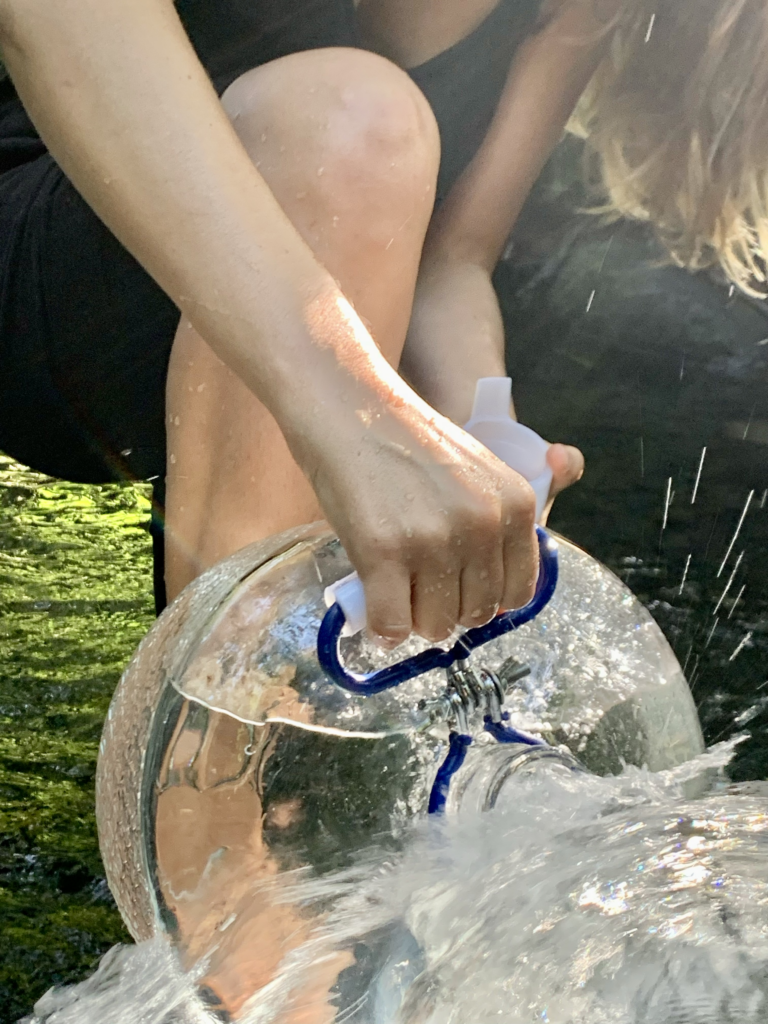
Once you’ve found your spring, figure out how you are going to gather the water. Is it right on the side of the road and easy to access or do you have to hike to it? We recommend storing spring water in glass instead of plastic to preserve the purity of the water. It is better for the environment, your body, and the water. Even BPA free plastic has toxic chemicals that can leach into water and cause health issues. If you do want to use plastic for safety reasons when filling at the spring, we recommend transferring the water to glass as soon as possible. FindASpring is sponsored by Alive Waters, which offers beautiful reusable glass. They have a 2.5 gallon option, which is a convenient size for carrying that isn’t too heavy. They also sell handles that you can use to transport the jugs even more easily. If you have to hike to access the spring, we recommend putting the water jugs into an extra large backpack to hike the water out with ease. We use Osprey packs that hold 2 jugs each. You can also use a wheelbarrow or even a stroller depending on how easy a walk it is.
When you get to the spring, remember to first give back before you take. Springs are considered sacred in indigenous cultures around the world for their life giving water and also as a connection to the inner earth. A powerful and simple way to give back is to clean up. Is there any trash that needs to be collected? Could you move any dead leaves or sticks to improve the flow rate? Show up in service. Some other wonderful ways to give is with a moment of expressing verbal gratitude, singing songs to the water, offering the water an ethically sourced crystal, a feather, or some other physical gift. Flowers are a popular and beautiful thing to offer, but please be careful to source organic ones as most flowers from the store are sprayed with pesticides and can be toxic to put near a spring. Also, flowers can attract bugs as they decay, so it can be best to offer them to the flowing water directly or a little downstream from the spring head.
When gathering the water, fill the jug as close to the spring head as possible, never gather downstream. Be very careful as wet glass is extremely slippery. Make sure the lid is securely fastened. When transporting the spring water home, the jugs can sometimes slide around the car. Secure them in place or wrap them with towels or something so they don’t crash into each other.
How you store your spring water is essential. It is not pasteurized like spring water from the store, so it will start growing algae if left in direct sunlight. This is good because it means it’s alive! If the water you drink can’t even support the most basic life forms, how do you think it will support your body? Store your water in a cool, dark place such as a dark corner, pantry or closet. The fridge is ideal if you have room. Some people prefer to filter their water through a Berkey filter before drinking, but if the spring is pure, it’s not necessary. We drink our spring water completely unfiltered.
How long the water stays good for depends on how cold a temperature it’s stored at. Spring water is best fresh. We personally do not prefer to drink spring water past 2 weeks old. However, we know other people that will drink it at a month old. It’s great to get in a rhythm where you know how long the water lasts you and put your collection day on the calendar in advance.
I believe that water is calling us to reconnect with her in the deepest way, to gather our own water. Just like our ancestors did. Our ancestors didn’t have fancy water machines. They also didn’t create villages or settle where there was no water. Water was revered as the center of the community and the nodal point around which life could spiral out and take root.
Here’s to restoring the sacred connection with the waters of life.
Responses