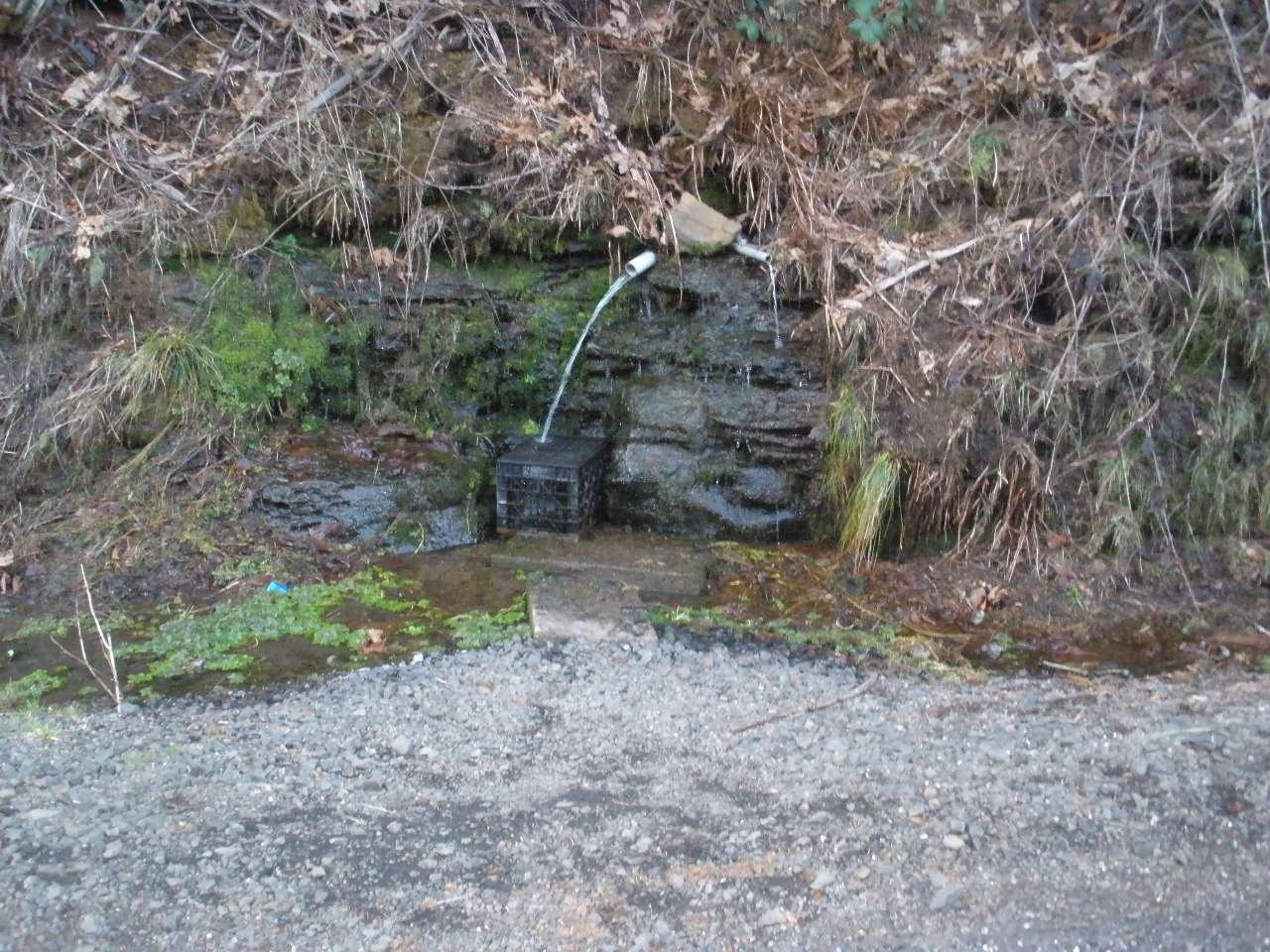
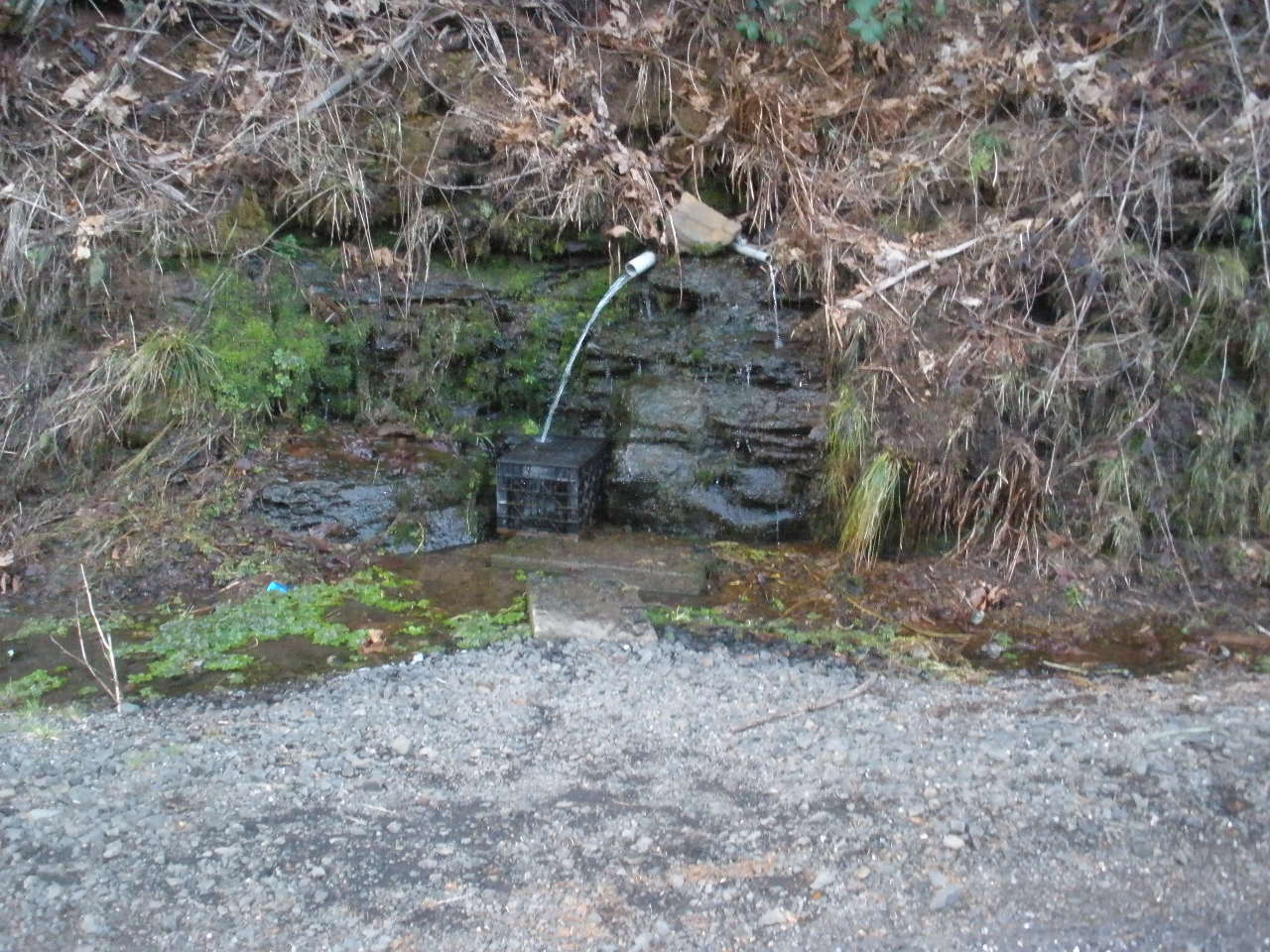
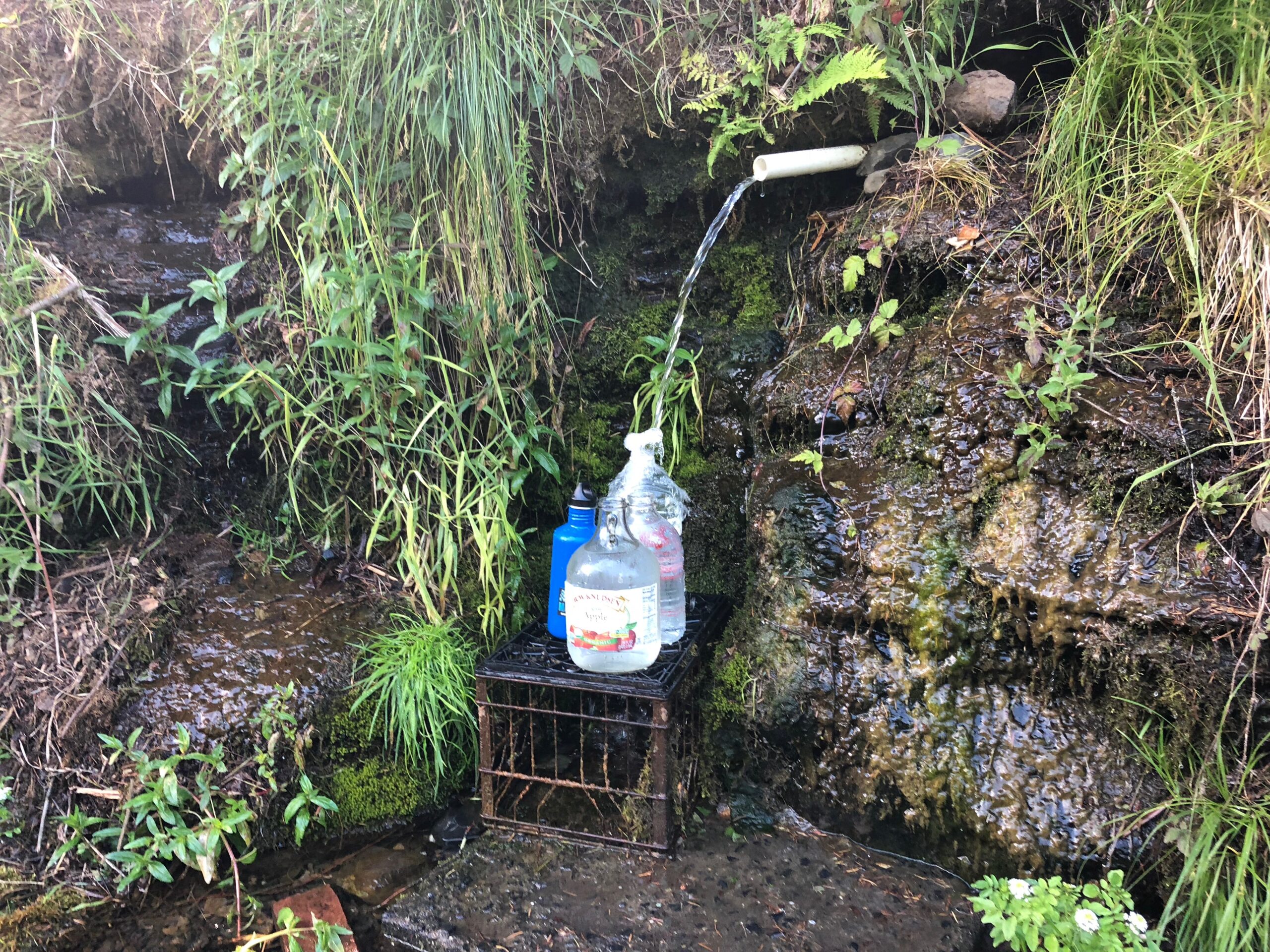
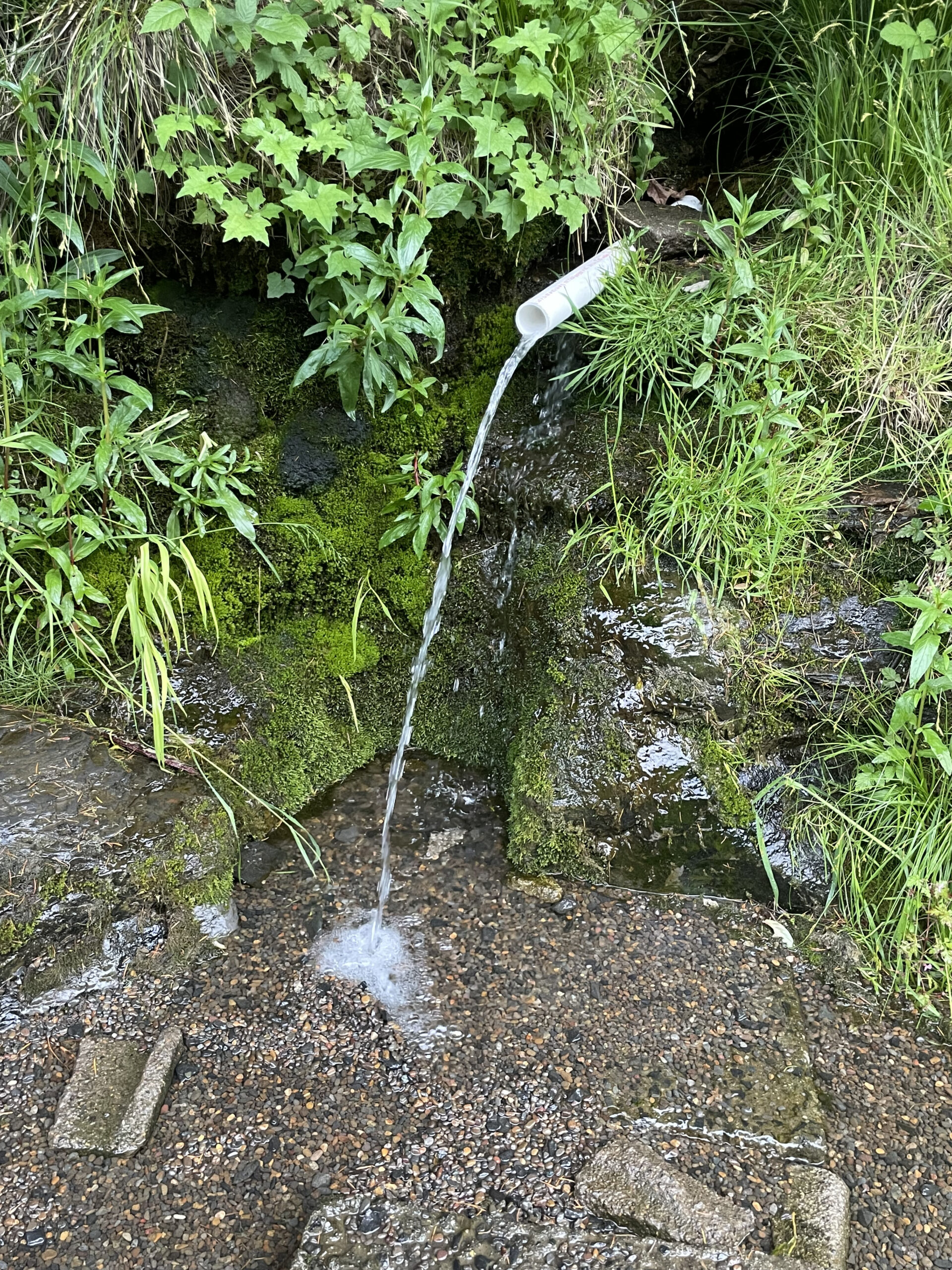
Year round flow on the side of the road via PVC pipe embedded into the side of the hill. Many locals stop daily for a fill up. The water is cold and instantly chills my glass jugs.
Nearest Address
Between Mile post 15 & 16 on Kings Valley Hwy.
Directions from Nearest Address
Large unmarked gravel pull-out on side of the road.
Stopped by today after a few hours working in the sun and WOW did that water taste amazing! Saw a giant banana slug in the moss left of the spring, the tiny little micro-biome there in the side of the hill is interesting. I didn’t have my camera so I took a photo with my tablet, but it’s not very sharp. Not sure where to upload it.
The location showing up on Google maps is False. Take King’s Valley Hwy north Past what I believe is Pedee Jeans on Google maps. You can use Pedee Jeans as a reference point. The spring is between milepost 16 & 15.
If you coming from the north heading SOUTH:
The spring is on the right side of the road just before the 55 MPH speed limit sign. On the left, you will see a gravel road
If you are coming from the South heading NORTH:
It’s harder to spot the spring. You will see the large gravel parking lot to the right. Park north where the gravel lot narrows and the spring will be to your left and you will see a “Adopt a highway” or similar sign further north.
The spring itself is simply a small PVC pipe with a little crate on the ground for you to fill up large water jugs. The water runs very fast, and it take little time to fill up a 6 gallon jug. I would have provided pictures, but it was late in the evening by the time I arrived.
Just now saw your reply. It rains here for nearly 6 months straight and that was the first and only time I’ve seen it cloudy, but thank you for taking the time to reply and elaborate.
I’ve been numerous times since and typically fill up about a month’s supply (approx. 60 gallons per visit). It’s always cold and fresh coming straight out of the mountainside. The water ph never changes when stored in glass. If it’s stored in plastic it leeches just enough plastic to balance out to 7.0 and the TDS goes up, so any new readers be sure to use glass containers.
I am new to the area and have just found this site. I am wondering if I can reuse plastic water bottles or if I have to use glass bottles. I know about things leaching from plastic but I don’t have glass bottles. Plan to purchase some but not there yet. Just curious.
#2 plastic (like the ones you buy in stores) is fine for use to maybe 5 times??? before I’d worry about bacteria – especially if you wash them out with a bottle brush and soap (rinse VERY well of course). Bacteria is the bigger problem with plastic water bottles (and even glass actually, so wash those thoroughly each time you refill also). The problems with the plastic leaching occur most with heat, acid and oils/fats but I wouldn’t use #3 (PVC) bottles. A few drops of food grade hydrogen peroxide fixes most bacteria storage problems if the water is kept in large containers for long periods (several weeks, especially summer). 2-5 gallon BPA free plastic water carriers are available but only get the ones you can get you HAND into to clean them.
Renee, what site can I go to for information on how much food grade hydrogen peroxide to put in my 1 gal. containers? You mentioned a few drops in large containers. So maybe 1 drop in a 1 gallon container? I’m having trouble finding info online.
@ Joseph. Hello and thank you for your extensive testing on this source. I have been reading the comments here, and also am looking for a new spingwater source for me as I used to live near Seattle and get my spring water in Alderwwod.
Im curious what your reports showed on the last testing you performed. Why was it cloudy? Did it settle? I did notice that at the spring in Alderwood one time, but it settled into just the particulate that you described above. From what Ive read I would like to make a trip to get my stock of containers filled up.
Do you have any comments or suggestions on other high quality or tested or just great tasting spring water sources that you may have tried in Oregon? Thanks
I went and filled 2 five gallon glass jugs today 1/22/16. The water can only be described as amazing. It was cold, clear and as someone else described it silky. I will have it tested next time I go out in a couple weeks.
The marker for this map needs to be updated. It’s between Hannum Rd and Fir Grove Rd (small roads) or, if you’d rather, Airlie Rd and Maple Grove Rd (larger roads).
Stopped by this spring on my way down to hike Mary’s Peak. Filled up my backpack bladder and two 5 gallon jugs. I’m curious, is this water bacteria/virus free or would it be advised to run it through a filter before drinking?
Drove up from Pleasant Hill to fill 5 5-gallon water jugs. Stopped at a produce stand a couple of miles north of the spring, and the woman there said the water has tested positive for nitrates (animal feces), and recommended adding a few drops of FOOD GRADE hydrogen peroxide.
I just went to this spring today, nice drive from Eugene, and I’ve gathered some info about it.
TDS: 38
Temperature: 50 degrees
The area is pretty rural and the spring, although it’s right next to the road, doesn’t seem to
exposed until it comes out of the side of the hill. I climbed up the hill some (wouldn’t advise that) and the spring appears to be underground. Tastes good and silky 🙂
If your heading north than start looking for the large gravel pullout a half mile after the sharp corner coming out of Pedee. The pullout is on the right and go to the end and the spring is on the left. You have to cross the highway to fill up.
Thank you for the information on the Kings Valley spring.
I have been unable to find anything on the internet regarding any testing for contaminants on this spring, such as agricultural, fecal, or toxic mineral contaminants.
Can anyone advise?
Drinking pure spring water is one of the most important things we can do for our health. Our bodies are over 99% water at the molecular level, so water affects every aspect of our biology. Yet, not all water is created equal. Almost all the bottled spring water available is pasteurized for shelf stability, which neutralizes many of the powerful health benefits such as increased hydrogen, healthy probiotics, and crystalline structure. For more about why unprocessed spring water is the best water to drink, read this.
The best way to guarantee you are getting real unprocessed spring water is to collect it yourself. This is a short and simple guide filled with information about how to gather spring water. We will cover how to find a spring, how to collect the water, how to honor the spring, how to store the water properly and other tips.
FindASpring.org is the best resource for locating a spring near you. However, not all springs are on the map. First, check the map to see if there is a spring in your local area. If there is, look at the reviews and comments. Has anyone shared helpful information about flow rate or posted a water test result? Is the spring in a pristine area? Do a bit of research and make sure the spring is safe to drink from. If you have any doubt about the purity, don’t risk it and get a water test, HERE. If you don’t see a spring on the map in your area, there still might be some that aren’t listed yet. First, ask the older generation who have lived in your area a long time if they know. You can also ask people in your community who might already get spring water such as people at a health food store or at a farmers market. Another great option is to view A US forest service map, where many springs have been marked. You can view these maps through the Gaia GPS or All Trails hiking apps on your phone. The map overlay you want is USGS Topo. Not all are easily accessible or ideal for drinking, but some are and it can be a fun adventure to find them. We have found over half a dozen great springs this way.
Once you’ve found your spring, figure out how you are going to gather the water. Is it right on the side of the road and easy to access or do you have to hike to it? We recommend storing spring water in glass instead of plastic to preserve the purity of the water. It is better for the environment, your body, and the water. Even BPA free plastic has toxic chemicals that can leach into water and cause health issues. If you do want to use plastic for safety reasons when filling at the spring, we recommend transferring the water to glass as soon as possible. FindASpring is sponsored by Alive Waters, which offers beautiful reusable glass. They have a 2.5 gallon option, which is a convenient size for carrying that isn’t too heavy. They also sell handles that you can use to transport the jugs even more easily. If you have to hike to access the spring, we recommend putting the water jugs into an extra large backpack to hike the water out with ease. We use Osprey packs that hold 2 jugs each. You can also use a wheelbarrow or even a stroller depending on how easy a walk it is.
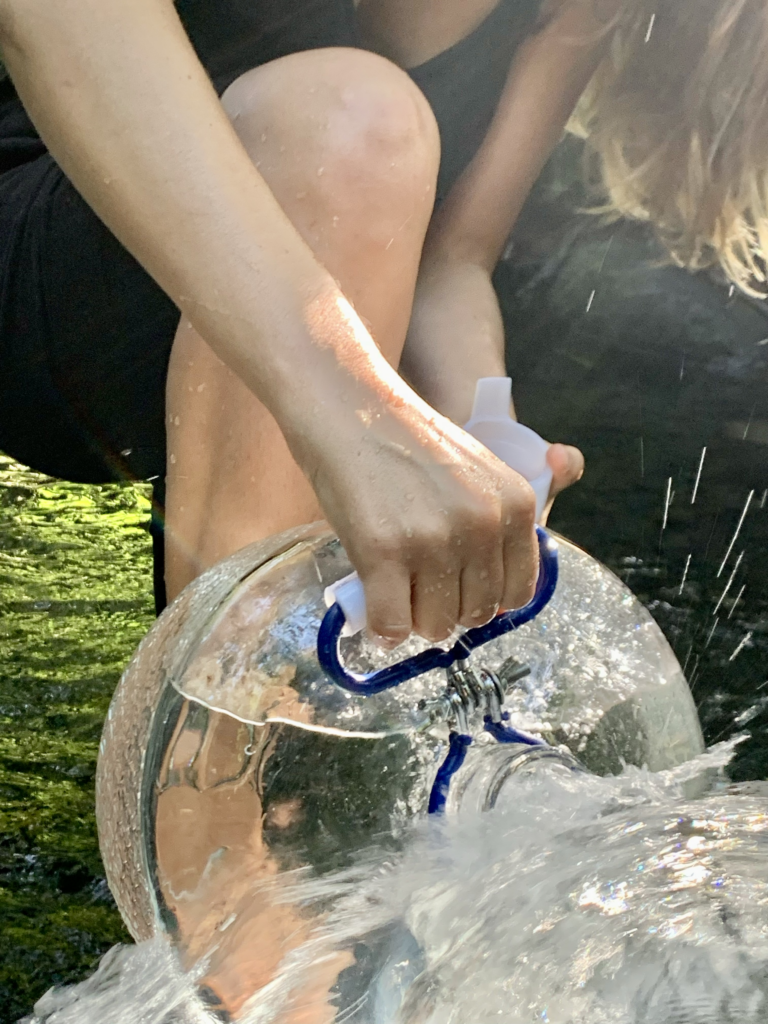
Filling 2.5 Gallon Alive Waters Jug
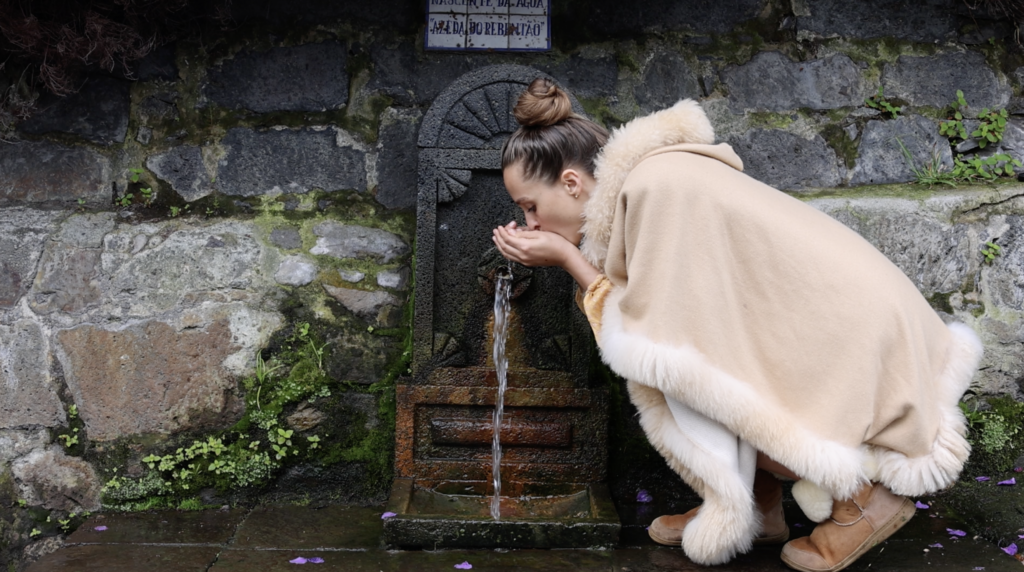
When you get to the spring, remember to first give back before you take. Springs are considered sacred in indigenous cultures around the world for their life giving water and also as a connection to the inner earth. A powerful and simple way to give back is to clean up. Is there any trash that needs to be collected? Could you move any dead leaves or sticks to improve the flow rate? Show up in service. Some other wonderful ways to give is with a moment of expressing verbal gratitude, singing songs to the water, offering the water an ethically sourced crystal, a feather, or some other physical gift. Flowers are a popular and beautiful thing to offer, but please be careful to source organic ones as most flowers from the store are sprayed with pesticides and can be toxic to put near a spring. Also, flowers can attract bugs as they decay, so it can be best to offer them to the flowing water directly or a little downstream from the spring head.
When gathering the water, fill the jug as close to the spring head as possible, never gather downstream. Be very careful as wet glass is extremely slippery. Make sure the lid is securely fastened. When transporting the spring water home, the jugs can sometimes slide around the car. Secure them in place or wrap them with towels or something so they don’t crash into each other.
How you store your spring water is essential. It is not pasteurized like spring water from the store, so it will start growing algae if left in direct sunlight. This is good because it means it’s alive! If the water you drink can’t even support the most basic life forms, how do you think it will support your body? Store your water in a cool, dark place such as a dark corner, pantry or closet. The fridge is ideal if you have room. Some people prefer to filter their water through a Berkey filter before drinking, but if the spring is pure, it’s not necessary. We drink our spring water completely unfiltered.
How long the water stays good for depends on how cold a temperature it’s stored at. Spring water is best fresh. We personally do not prefer to drink spring water past 2 weeks old. However, we know other people that will drink it at a month old. It’s great to get in a rhythm where you know how long the water lasts you and put your collection day on the calendar in advance.
I believe that water is calling us to reconnect with her in the deepest way, to gather our own water. Just like our ancestors did. Our ancestors didn’t have fancy water machines. They also didn’t create villages or settle where there was no water. Water was revered as the center of the community and the nodal point around which life could spiral out and take root.
Here’s to restoring the sacred connection with the waters of life.
Written by Dakota Chanel. Water Priestess and Ceremonialist. DakotaChanel.com
Do you have info you'd like to add to the main spring description or perhaps a more accurate gps coordinate?
Please start by making a comment on this spring's page with any additional info, or something that you feel should be changed to reflect more accurate data. After your comment is liked by enough community members, this will validate the improved information.
Please notify us if an update with enough likes hasn't been updated in the description yet.
Please note:
This action will also remove this member from your connections and send a report to the site admin.
Please allow a few minutes for this process to complete.

 Skotty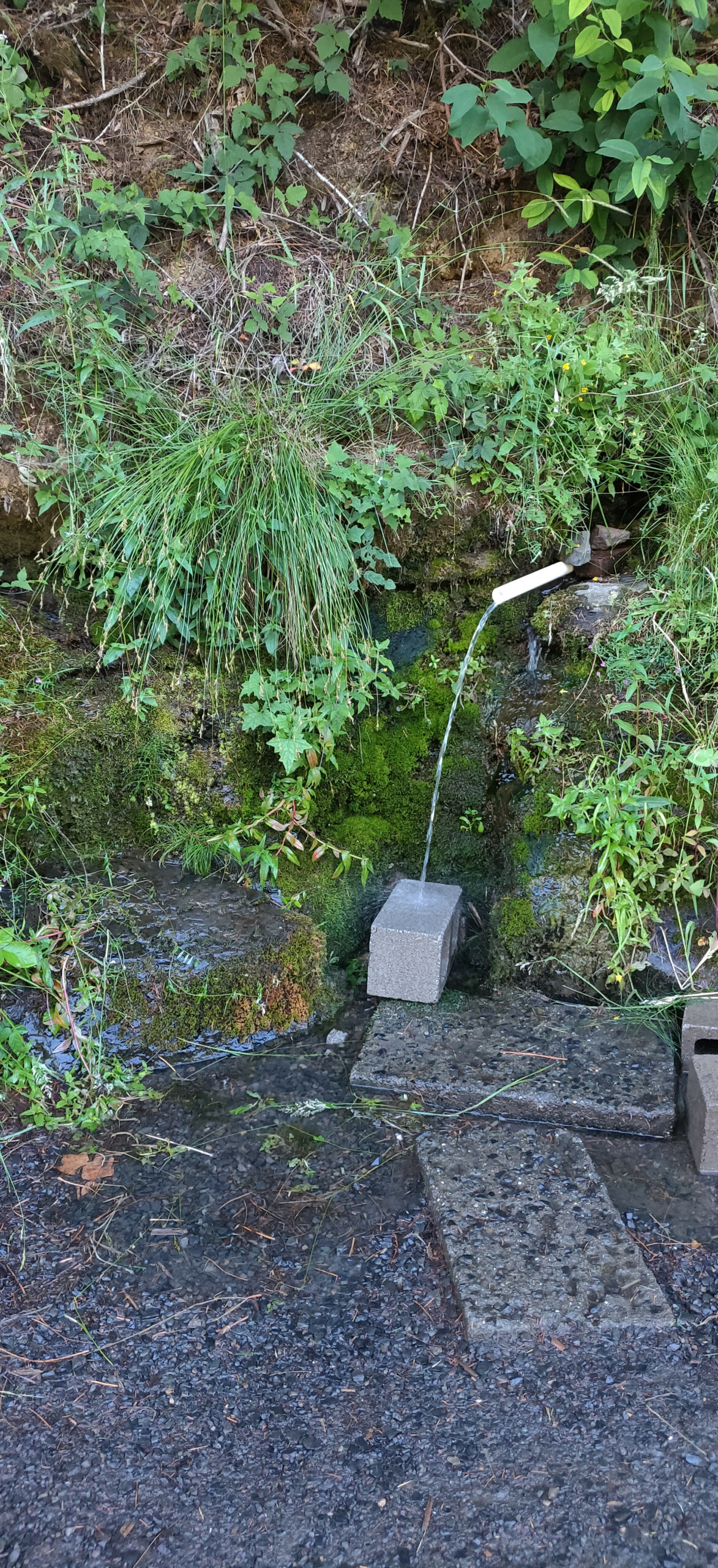
 Whitney
Spring is seen from the road and is clean. Water is nice, fresh tasting great.
Stopped by today after a few hours working in the sun and WOW did that water taste amazing! Saw a giant banana slug in the moss left of the spring, the tiny little micro-biome there in the side of the hill is interesting. I didn’t have my camera so I took a photo with my tablet, but it’s not very sharp. Not sure where to upload it.
The location showing up on Google maps is False. Take King’s Valley Hwy north Past what I believe is Pedee Jeans on Google maps. You can use Pedee Jeans as a reference point. The spring is between milepost 16 & 15.
If you coming from the north heading SOUTH:
The spring is on the right side of the road just before the 55 MPH speed limit sign. On the left, you will see a gravel road
If you are coming from the South heading NORTH:
It’s harder to spot the spring. You will see the large gravel parking lot to the right. Park north where the gravel lot narrows and the spring will be to your left and you will see a “Adopt a highway” or similar sign further north.
The spring itself is simply a small PVC pipe with a little crate on the ground for you to fill up large water jugs. The water runs very fast, and it take little time to fill up a 6 gallon jug. I would have provided pictures, but it was late in the evening by the time I arrived.
anybody collected water recently? im new to this and would like to but want to k ow if i should test before drinking?
>Attn: JILL NIGHTINGALE
Just now saw your reply. It rains here for nearly 6 months straight and that was the first and only time I’ve seen it cloudy, but thank you for taking the time to reply and elaborate.
I’ve been numerous times since and typically fill up about a month’s supply (approx. 60 gallons per visit). It’s always cold and fresh coming straight out of the mountainside. The water ph never changes when stored in glass. If it’s stored in plastic it leeches just enough plastic to balance out to 7.0 and the TDS goes up, so any new readers be sure to use glass containers.
Just returned from my first trip to the spring. WOW is that water tasty!!!! Very easy to find!
I am new to the area and have just found this site. I am wondering if I can reuse plastic water bottles or if I have to use glass bottles. I know about things leaching from plastic but I don’t have glass bottles. Plan to purchase some but not there yet. Just curious.
#2 plastic (like the ones you buy in stores) is fine for use to maybe 5 times??? before I’d worry about bacteria – especially if you wash them out with a bottle brush and soap (rinse VERY well of course). Bacteria is the bigger problem with plastic water bottles (and even glass actually, so wash those thoroughly each time you refill also). The problems with the plastic leaching occur most with heat, acid and oils/fats but I wouldn’t use #3 (PVC) bottles. A few drops of food grade hydrogen peroxide fixes most bacteria storage problems if the water is kept in large containers for long periods (several weeks, especially summer). 2-5 gallon BPA free plastic water carriers are available but only get the ones you can get you HAND into to clean them.
Renee, what site can I go to for information on how much food grade hydrogen peroxide to put in my 1 gal. containers? You mentioned a few drops in large containers. So maybe 1 drop in a 1 gallon container? I’m having trouble finding info online.
@ Joseph. Hello and thank you for your extensive testing on this source. I have been reading the comments here, and also am looking for a new spingwater source for me as I used to live near Seattle and get my spring water in Alderwwod.
Im curious what your reports showed on the last testing you performed. Why was it cloudy? Did it settle? I did notice that at the spring in Alderwood one time, but it settled into just the particulate that you described above. From what Ive read I would like to make a trip to get my stock of containers filled up.
Do you have any comments or suggestions on other high quality or tested or just great tasting spring water sources that you may have tried in Oregon? Thanks
I went and filled 2 five gallon glass jugs today 1/22/16. The water can only be described as amazing. It was cold, clear and as someone else described it silky. I will have it tested next time I go out in a couple weeks.
Thank you Joseph do you feel safe drinking the water or do you recommend treating it first with something ?
More on Iron bacteria here:
https://en.wikipedia.org/wiki/Iron_bacteria
GPS coordinates
44.777438, -123.416157
The marker for this map needs to be updated. It’s between Hannum Rd and Fir Grove Rd (small roads) or, if you’d rather, Airlie Rd and Maple Grove Rd (larger roads).
The non-digital latitude coordinates are 44 – 46′ – 39″
Stopped by this spring on my way down to hike Mary’s Peak. Filled up my backpack bladder and two 5 gallon jugs. I’m curious, is this water bacteria/virus free or would it be advised to run it through a filter before drinking?
Drove up from Pleasant Hill to fill 5 5-gallon water jugs. Stopped at a produce stand a couple of miles north of the spring, and the woman there said the water has tested positive for nitrates (animal feces), and recommended adding a few drops of FOOD GRADE hydrogen peroxide.
Does anyone know what the pH of this water is?
This is a great spring! Very easy to find if you stop following google directions at Kings Hwy. The water is awesome and it’s an easy fill.
delicious water and easy access. thanks for the TDS reading, John.
Incredible water. And yes, the directions are not totally accurate
I just went to this spring today, nice drive from Eugene, and I’ve gathered some info about it.
TDS: 38
Temperature: 50 degrees
The area is pretty rural and the spring, although it’s right next to the road, doesn’t seem to
exposed until it comes out of the side of the hill. I climbed up the hill some (wouldn’t advise that) and the spring appears to be underground. Tastes good and silky 🙂
If your heading north than start looking for the large gravel pullout a half mile after the sharp corner coming out of Pedee. The pullout is on the right and go to the end and the spring is on the left. You have to cross the highway to fill up.
Thank you for the information on the Kings Valley spring.
I have been unable to find anything on the internet regarding any testing for contaminants on this spring, such as agricultural, fecal, or toxic mineral contaminants.
Can anyone advise?
According to the water maestro pH 6.6 / TDS 32PPM = acid rain… remove the TDS and the pH will be 5.5 or lower!