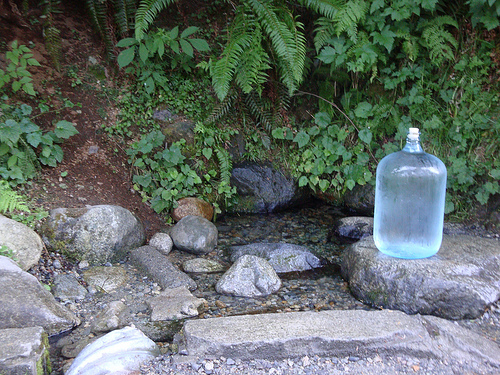
Small circular pool dug out left of the road. Surrounded in rocks, pool drains into a pipe that goes under ground and off into the bush somewhere. The water spring is 800 metres from the park gate.
Nearest Address
Lynn Valley Rd and Depesey
Directions from Nearest Address
As you get to the end of Lynn Valley rd, you enter the regional park. The Road will split into two, take the left road with the gate. Drive for about a minute and you will see the small dig out in the ditch to the left of the road. there will be a place to park across the street from the spring. It is surrounded in rocks and has a drainage pipe.
A spring is essentially the source. While the actual source is rain water; somewhere up the mountain rain water is collected and seeps through the soil, and further seepage occurs through layers of sedimentary rock, collecting minerals and filtering out pathogens and most of the toxins such as sulfur oxide and other oxides which result in acid rain… the limestone which is probably present probably neutralizes this, although I’m not certain.. anyways.. the ocean is the original source, where it rains and seeps through… becomes neutralized somewhere along the road.. and may contain heavy metals and probably contains quite a bit of arsenic.
Cars, animals, potential animal feces, HUMAN pollutants. Is this not a concern given it’s right on the road? I’ve wondered why I’ve seen people with bottles on the side of the road. It’s a stagnant pool. I figured they were bottling water for their dogs. I love the idea, but these days I wouldn’t trust any natural spring without filtering it first.
My friend,
The road is actually not very busy as it is a private road.
I would like to point out that this hydro-logically filtered spring is not a stagnant pool; it does flow continuously into a drain. Saying that, I’ve loaded up my car with beautiful rocks from Seylynn creek to line the pool for better drainage and block the excess flow from the left side of the pool.
This water is the most fresh tasting, thirst quenching pristine sources of water I’ve ever drank from. Some individuals have been collecting from this spring for over 25 years! Though what is a little irritating is when individuals park their cars right up beside the spring filling up their bottles while their cars are still running, or when individuals step on the shallow rocks pushing debris into the pool. Logic is necessary when collecting spring water.
lame,
drink tha water man, yr scared to drink outside water cause you’ve lived in acity too long. can’t be any worse than any of the other water you drink which you know little to nothing about its origins.head, out, of ass.
I drank that kind of water once already, but then I was sick for 3 days. Did not leave the toilet for several hours a day. Bottled water is definitely better for me.
Again, I am hearing that this water is contaminated with arsenic. Has anyone actually had the water tested. As I am giving it to kids, I really don’t want to take chances with heavy metals. For now, we won’t drink it and I am wondering when the tap at the headwaters will be opened?
From: Muirhead, Phil
Sent: Tuesday November 02, 2010 2:50 PM
To: Lorn Carter
Subject: FW: Lynn head water spring
Lorn, I’m aware of the spring in question. Surface water sources such as springs are considered to be non-potable sources of water. In other words the water needs to be treated before its considered safe to drink. This is due to the fact the water is an open source susceptible to contamination at any time. Bacteriological sampling of untreated surface water sources is not done in the interest of determining if the water is safe or not because the results are only valid for the water collected at that moment.
The warning issued to users of this spring is the same warning issued to anyone traveling in the woods. Don’t drink water directly from an open surface water source. I’ve attached a Heath Link File dealing with the issue of water borne diseases.
PLEASE NOTE NEW CONTACT INFORMATION EFFECTIVE JUNE 4th, 2010:
As a friend who introduced me to the spring at Lynn Valley said, “I’m glad the Dist. of North Van posted the sign there…it keeps the place from becoming too popular.” BTW, he had scientist friends test the water. Based on what they found, I have been drinking the water for over a year. It’s the only water I drink, and my plants love it. Sorry, I do not agree with “piping” as that is a commercial venture and totally out of context and character for this spring given freely to us from mother nature. And the water is not stagnant…it is always flowing continously.
well i was thinking about building one at Lynn canyon.
i got the pipping and so on its really just a matter of putting together the game plan.
i like the idea of pipe delivery system as a sitting pool can accumulate gardia and criptosparidium.
Ive been phoning north Vancouver parks board about the quality and if they test but haven’t received a reply.
im going to get the water tested next week to easy curiosity.
You should never just rely on what you “herd”. I think if the water was toxic the spring would be shut down by park authorities(they are well aware people drink this water). I’ve drank from this spring along with many others that I know. Wonderful water:)
I have heard recently from a friend, that an owner of a health food store she sells to, knows a self proclaimed water wizard who tested this water himself and found Arsenic in it. Now, admittedly it was not done in a lab, but rather his own tests, but does have me concerned alittle, as i love this water and get it often. I can’t get an further info, but hoping someone else may have had it tested, or is planning on it?
this spring was just talked about by david wolfe this weekend. i am going to head there today and pick up a couple of three gallons. thanks for the map and directions. namaste
Maybe 20 years ago, I used to get my water from this spring. Then I had thought they had demolished it some how. It was always lovely water. It is wonderful to think that it is still available. Several other spots around North Van were ruined by highway building and such.
Is that the picture in the flickr link? If so, I can just grab it from there. If you have more, send it to us directly. Leave the info through the Contact Us form above and we'll give you an email address to send the images too.
Is that the picture in the flickr link? If so, I can just grab it from there. If you have more, send it to us directly. Leave the info through the Contact Us form above and we'll give you an email address to send the images too.
Hello everyone,
This is my first visit to this post. I live in Lynn Valley and have been drinking the water from the spring (pool beside the road) at the Lynn Valley Headwaters for about 3 years. We have not had any serious health effects, but I have to admit, I do wonder about testing myself. I was away for a couple of months and when I came back in June 2012, I noticed that a small stream of water was coming in from the side of the mountain that had not been there before. And, or course, the District had posted their notice. I decided to phone the District and speak to the folks that were directly involved with the water supply there. They were very informative and I was able to dispel many stories that had been told to me at the spring over the years. Firstly, the water at the fountain close to the bridge and buildings is not the same water. It comes from a well, is treated and tested regularly. The reason they put up the sign is because they have had so many phone calls from folks asking whether the water is tested, so finally decided to answer this by a sign. I have just sat there and watched the flow of the water to see whether the surface or little mountain stream is flowing into the pool. It is hard to say whether there is a small amount of contamination, but it is certain that there is a steady outflow from the spring that does keep purifying itself and the flow is always away from the pool and towards the drain.
Having said that, I have wanted to test this for years and I think with the amount of interest on this site, we should go ahead and pool our resources and just get it done. If you would contribute to this, please email me at d_s_peters@hotmail.com. I would suggest that each person contribute $10.00 and when we have reached the total cost for testing, we will get it done. I could collect the money and water and get the test done. There would be some trust involved, but I’d be happy to meet each one of you to satisfy any doubts. I guess, worst case scenario, you’d lose $10.00:) (joking!). I really want to get this going, so please…let’s do this for our health’s sake and not leave this to chance anymore. Thanks! Sharon
Hi Sharon..Brian here, I meet you this morning at the spring.
Nice chatting with you.
Please count me in for the testing..you can reach me @Brian4520002000@yahoo.ca Hope to do this soon…
Hi Brian,
Thanks for responding so quick. I met another lady after you left and got her email. So far with you, there are four confirmed people and I think I know some more to contact and ask. I will email you to keep you posted.
The water spring is 800 metres from the park gate mentioned above. TDS reading around 70 parts per million, which is excellent and a pH reading of 7.1, which is also excellent.
Moving rocks and throwing mud in the pond has happend frequently in the last few weeks. It takes a lot of time to do such
horrible thing and I strongly think they do it after the gate is closed!
Otherwise this is a frequently visited spring and somebody would have seen the offenders during the day. Is that a part of the “Problem-Solution-Reaction” strategy to close this spring like they did in Delta?!
I went to the spring today,as I go there once a week to fill up my bottles and was horrified. Someone removed the stones, flattened the stream and throw mud into the stream. I don’t think is anyone who likes the water, more likely someone who doesn’t want us to drink the water. I wonder if anyone seen someone around the spring to behave rather odd. They have also removed the purifying plant.
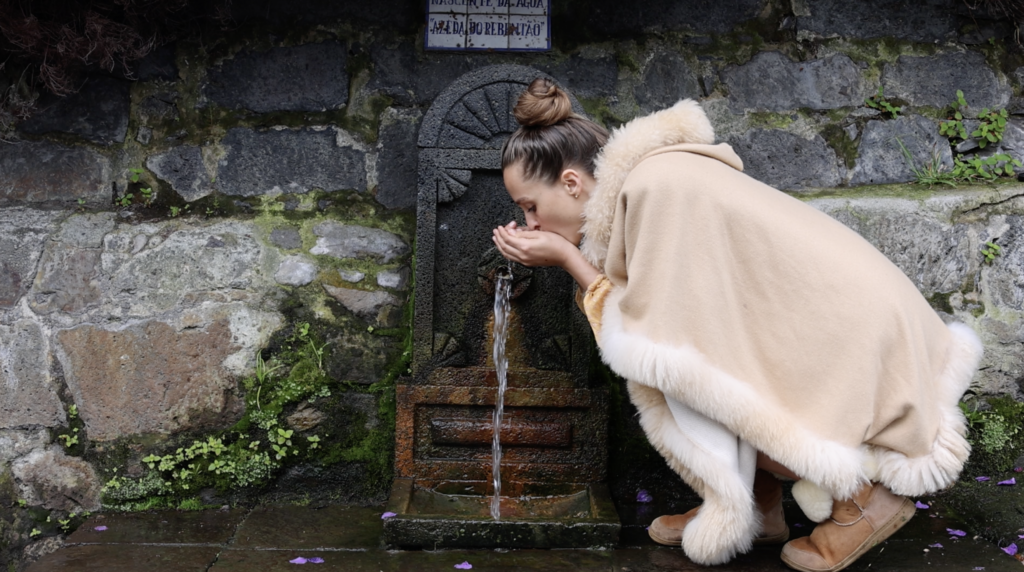
Drinking pure spring water is one of the most important things we can do for our health. Our bodies are over 99% water at the molecular level, so water affects every aspect of our biology. Yet, not all water is created equal. Almost all the bottled spring water available is pasteurized for shelf stability, which neutralizes many of the powerful health benefits such as increased hydrogen, healthy probiotics, and crystalline structure. For more about why unprocessed spring water is the best water to drink, read this.
The best way to guarantee you are getting real unprocessed spring water is to collect it yourself. This is a short and simple guide filled with information about how to gather spring water. We will cover how to find a spring, how to collect the water, how to honor the spring, how to store the water properly and other tips.
FindASpring.org is the best resource for locating a spring near you. However, not all springs are on the map. First, check the map to see if there is a spring in your local area. If there is, look at the reviews and comments. Has anyone shared helpful information about flow rate or posted a water test result? Is the spring in a pristine area? Do a bit of research and make sure the spring is safe to drink from. If you have any doubt about the purity, don’t risk it and get a water test, HERE. If you don’t see a spring on the map in your area, there still might be some that aren’t listed yet. First, ask the older generation who have lived in your area a long time if they know. You can also ask people in your community who might already get spring water such as people at a health food store or at a farmers market. Another great option is to view A US forest service map, where many springs have been marked. You can view these maps through the Gaia GPS or All Trails hiking apps on your phone. The map overlay you want is USGS Topo. Not all are easily accessible or ideal for drinking, but some are and it can be a fun adventure to find them. We have found over half a dozen great springs this way.
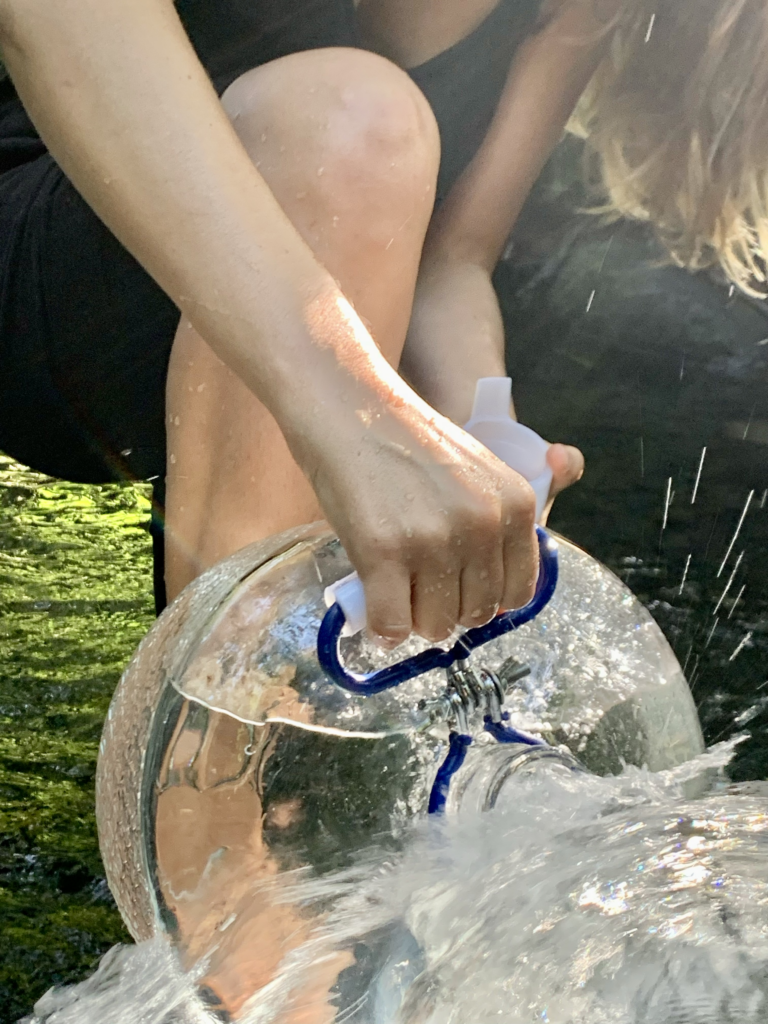
Once you’ve found your spring, figure out how you are going to gather the water. Is it right on the side of the road and easy to access or do you have to hike to it? We recommend storing spring water in glass instead of plastic to preserve the purity of the water. It is better for the environment, your body, and the water. Even BPA free plastic has toxic chemicals that can leach into water and cause health issues. If you do want to use plastic for safety reasons when filling at the spring, we recommend transferring the water to glass as soon as possible. FindASpring is sponsored by Alive Waters, which offers beautiful reusable glass. They have a 2.5 gallon option, which is a convenient size for carrying that isn’t too heavy. They also sell handles that you can use to transport the jugs even more easily. If you have to hike to access the spring, we recommend putting the water jugs into an extra large backpack to hike the water out with ease. We use Osprey packs that hold 2 jugs each. You can also use a wheelbarrow or even a stroller depending on how easy a walk it is.
Filling 2.5 Gallon Alive Waters Jug
When you get to the spring, remember to first give back before you take. Springs are considered sacred in indigenous cultures around the world for their life giving water and also as a connection to the inner earth. A powerful and simple way to give back is to clean up. Is there any trash that needs to be collected? Could you move any dead leaves or sticks to improve the flow rate? Show up in service. Some other wonderful ways to give is with a moment of expressing verbal gratitude, singing songs to the water, offering the water an ethically sourced crystal, a feather, or some other physical gift. Flowers are a popular and beautiful thing to offer, but please be careful to source organic ones as most flowers from the store are sprayed with pesticides and can be toxic to put near a spring. Also, flowers can attract bugs as they decay, so it can be best to offer them to the flowing water directly or a little downstream from the spring head.
When gathering the water, fill the jug as close to the spring head as possible, never gather downstream. Be very careful as wet glass is extremely slippery. Make sure the lid is securely fastened. When transporting the spring water home, the jugs can sometimes slide around the car. Secure them in place or wrap them with towels or something so they don’t crash into each other.
How you store your spring water is essential. It is not pasteurized like spring water from the store, so it will start growing algae if left in direct sunlight. This is good because it means it’s alive! If the water you drink can’t even support the most basic life forms, how do you think it will support your body? Store your water in a cool, dark place such as a dark corner, pantry or closet. The fridge is ideal if you have room. Some people prefer to filter their water through a Berkey filter before drinking, but if the spring is pure, it’s not necessary. We drink our spring water completely unfiltered.
How long the water stays good for depends on how cold a temperature it’s stored at. Spring water is best fresh. We personally do not prefer to drink spring water past 2 weeks old. However, we know other people that will drink it at a month old. It’s great to get in a rhythm where you know how long the water lasts you and put your collection day on the calendar in advance.
I believe that water is calling us to reconnect with her in the deepest way, to gather our own water. Just like our ancestors did. Our ancestors didn’t have fancy water machines. They also didn’t create villages or settle where there was no water. Water was revered as the center of the community and the nodal point around which life could spiral out and take root.
Here’s to restoring the sacred connection with the waters of life.
Written by Dakota Chanel. Water Priestess and Ceremonialist. DakotaChanel.com
Do you have info you'd like to add to the main spring description or perhaps a more accurate gps coordinate?
Please start by making a comment on this spring's page with any additional info, or something that you feel should be changed to reflect more accurate data. After your comment is liked by enough community members, this will validate the improved information.
Please notify us if an update with enough likes hasn't been updated in the description yet.
Lynn Headwater Spring, North Vancouver, BC, Canada
Report
There was a problem reporting this post.
Block Member?
Please confirm you want to block this member.
You will no longer be able to:
See blocked member's posts
Mention this member in posts
Message this member
Add this member as a connection
Please note:
This action will also remove this member from your connections and send a report to the site admin.
Please allow a few minutes for this process to complete.


Does anyone know where the source is? Or is this spring considered to be the source?
A spring is essentially the source. While the actual source is rain water; somewhere up the mountain rain water is collected and seeps through the soil, and further seepage occurs through layers of sedimentary rock, collecting minerals and filtering out pathogens and most of the toxins such as sulfur oxide and other oxides which result in acid rain… the limestone which is probably present probably neutralizes this, although I’m not certain.. anyways.. the ocean is the original source, where it rains and seeps through… becomes neutralized somewhere along the road.. and may contain heavy metals and probably contains quite a bit of arsenic.
Cars, animals, potential animal feces, HUMAN pollutants. Is this not a concern given it’s right on the road? I’ve wondered why I’ve seen people with bottles on the side of the road. It’s a stagnant pool. I figured they were bottling water for their dogs. I love the idea, but these days I wouldn’t trust any natural spring without filtering it first.
My friend,
The road is actually not very busy as it is a private road.
I would like to point out that this hydro-logically filtered spring is not a stagnant pool; it does flow continuously into a drain. Saying that, I’ve loaded up my car with beautiful rocks from Seylynn creek to line the pool for better drainage and block the excess flow from the left side of the pool.
This water is the most fresh tasting, thirst quenching pristine sources of water I’ve ever drank from. Some individuals have been collecting from this spring for over 25 years! Though what is a little irritating is when individuals park their cars right up beside the spring filling up their bottles while their cars are still running, or when individuals step on the shallow rocks pushing debris into the pool. Logic is necessary when collecting spring water.
Regards
lame,
drink tha water man, yr scared to drink outside water cause you’ve lived in acity too long. can’t be any worse than any of the other water you drink which you know little to nothing about its origins.head, out, of ass.
I drank that kind of water once already, but then I was sick for 3 days. Did not leave the toilet for several hours a day. Bottled water is definitely better for me.
Again, I am hearing that this water is contaminated with arsenic. Has anyone actually had the water tested. As I am giving it to kids, I really don’t want to take chances with heavy metals. For now, we won’t drink it and I am wondering when the tap at the headwaters will be opened?
From: Muirhead, Phil
Sent: Tuesday November 02, 2010 2:50 PM
To: Lorn Carter
Subject: FW: Lynn head water spring
Lorn, I’m aware of the spring in question. Surface water sources such as springs are considered to be non-potable sources of water. In other words the water needs to be treated before its considered safe to drink. This is due to the fact the water is an open source susceptible to contamination at any time. Bacteriological sampling of untreated surface water sources is not done in the interest of determining if the water is safe or not because the results are only valid for the water collected at that moment.
The warning issued to users of this spring is the same warning issued to anyone traveling in the woods. Don’t drink water directly from an open surface water source. I’ve attached a Heath Link File dealing with the issue of water borne diseases.
PLEASE NOTE NEW CONTACT INFORMATION EFFECTIVE JUNE 4th, 2010:
Phil Muirhead
Environmental Health Officer
Vancouver Coastal Health
6h Floor, 132 West Esplanade
North Vancouver, BC, V7M 1A2
P: 604-983-6756 F: 604-983-6702
As a friend who introduced me to the spring at Lynn Valley said, “I’m glad the Dist. of North Van posted the sign there…it keeps the place from becoming too popular.” BTW, he had scientist friends test the water. Based on what they found, I have been drinking the water for over a year. It’s the only water I drink, and my plants love it. Sorry, I do not agree with “piping” as that is a commercial venture and totally out of context and character for this spring given freely to us from mother nature. And the water is not stagnant…it is always flowing continously.
im heading there today, how deep is the pool?
is anyone intrested in building a spring with me? i got the pipping and so on
The pool is only about a foot or so deep. Where are you building a spring?
well i was thinking about building one at Lynn canyon.
i got the pipping and so on its really just a matter of putting together the game plan.
i like the idea of pipe delivery system as a sitting pool can accumulate gardia and criptosparidium.
Ive been phoning north Vancouver parks board about the quality and if they test but haven’t received a reply.
im going to get the water tested next week to easy curiosity.
Hi Engelwood, how the project of building the spring going? Need some help?
Hello Rod,
Have you been up to the well lately? Has it been ‘piped’ by any chance?
Merci!
Hi, I got water last week. There’s no pipe but the pool is deep enough for one gallon glass bottles. Amazing water.
Hello,
I’m wondering if you succeeded with your fantastic idea of piping the spring water?
Thank you!
You should never just rely on what you “herd”. I think if the water was toxic the spring would be shut down by park authorities(they are well aware people drink this water). I’ve drank from this spring along with many others that I know. Wonderful water:)
If it had arsenic you would think that the health authorities would of posted a warning at the site …. Awaiting to hear more
I have heard recently from a friend, that an owner of a health food store she sells to, knows a self proclaimed water wizard who tested this water himself and found Arsenic in it. Now, admittedly it was not done in a lab, but rather his own tests, but does have me concerned alittle, as i love this water and get it often. I can’t get an further info, but hoping someone else may have had it tested, or is planning on it?
blessings
Hey ‘DJ’can you please send me the adres of the health food store ?Please.
I m waiting just soo you know.Tankyou.
this spring was just talked about by david wolfe this weekend. i am going to head there today and pick up a couple of three gallons. thanks for the map and directions. namaste
Maybe 20 years ago, I used to get my water from this spring. Then I had thought they had demolished it some how. It was always lovely water. It is wonderful to think that it is still available. Several other spots around North Van were ruined by highway building and such.
Get the picture @ https://www.flickr.com/photos/27880837@N03/38166… to put it up on the description.
Is that the picture in the flickr link? If so, I can just grab it from there. If you have more, send it to us directly. Leave the info through the Contact Us form above and we'll give you an email address to send the images too.
~ JS
I have a picture of this spring, how can I add it to the description?
It is that picture on flickr, fell free to grab that one.
A big size version is @ https://www.flickr.com/photos/27880837@N03/37513…
Thanks! Rod
Is that the picture in the flickr link? If so, I can just grab it from there. If you have more, send it to us directly. Leave the info through the Contact Us form above and we'll give you an email address to send the images too.
~ JS
I have a picture of this spring, how can I add it to the description?
https://www.flickr.com/photos/27880837@N03/37513…
Thanks for that info! I was wondering what the TDS is. Its beautiful water!!! Slightly sweet taste, packed full of energy.
Hello everyone,
This is my first visit to this post. I live in Lynn Valley and have been drinking the water from the spring (pool beside the road) at the Lynn Valley Headwaters for about 3 years. We have not had any serious health effects, but I have to admit, I do wonder about testing myself. I was away for a couple of months and when I came back in June 2012, I noticed that a small stream of water was coming in from the side of the mountain that had not been there before. And, or course, the District had posted their notice. I decided to phone the District and speak to the folks that were directly involved with the water supply there. They were very informative and I was able to dispel many stories that had been told to me at the spring over the years. Firstly, the water at the fountain close to the bridge and buildings is not the same water. It comes from a well, is treated and tested regularly. The reason they put up the sign is because they have had so many phone calls from folks asking whether the water is tested, so finally decided to answer this by a sign. I have just sat there and watched the flow of the water to see whether the surface or little mountain stream is flowing into the pool. It is hard to say whether there is a small amount of contamination, but it is certain that there is a steady outflow from the spring that does keep purifying itself and the flow is always away from the pool and towards the drain.
Having said that, I have wanted to test this for years and I think with the amount of interest on this site, we should go ahead and pool our resources and just get it done. If you would contribute to this, please email me at d_s_peters@hotmail.com. I would suggest that each person contribute $10.00 and when we have reached the total cost for testing, we will get it done. I could collect the money and water and get the test done. There would be some trust involved, but I’d be happy to meet each one of you to satisfy any doubts. I guess, worst case scenario, you’d lose $10.00:) (joking!). I really want to get this going, so please…let’s do this for our health’s sake and not leave this to chance anymore. Thanks! Sharon
Hi Sharon..Brian here, I meet you this morning at the spring.
Nice chatting with you.
Please count me in for the testing..you can reach me @Brian4520002000@yahoo.ca Hope to do this soon…
Hi Brian,
Thanks for responding so quick. I met another lady after you left and got her email. So far with you, there are four confirmed people and I think I know some more to contact and ask. I will email you to keep you posted.
The water spring is 800 metres from the park gate mentioned above. TDS reading around 70 parts per million, which is excellent and a pH reading of 7.1, which is also excellent.
Moving rocks and throwing mud in the pond has happend frequently in the last few weeks. It takes a lot of time to do such
horrible thing and I strongly think they do it after the gate is closed!
Otherwise this is a frequently visited spring and somebody would have seen the offenders during the day. Is that a part of the “Problem-Solution-Reaction” strategy to close this spring like they did in Delta?!
I went to the spring today,as I go there once a week to fill up my bottles and was horrified. Someone removed the stones, flattened the stream and throw mud into the stream. I don’t think is anyone who likes the water, more likely someone who doesn’t want us to drink the water. I wonder if anyone seen someone around the spring to behave rather odd. They have also removed the purifying plant.