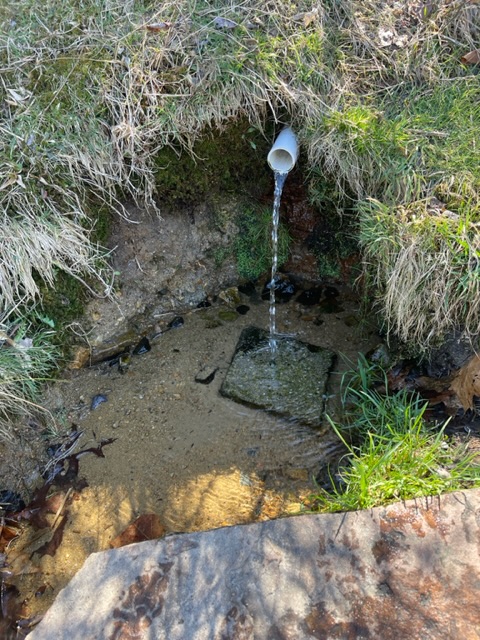
There is a spout. It is on side of rt.184. There is a blue sign stating “this is not an approved water source. Users do so at their own risk. North Stonington health department.
Nearest Address
Intersection of rt. 184 and rt.49 North Stonington, Connecticut 06359.
Directions from Nearest Address
FROM THE NORTH:
interstate 95 southbound to connecticut exit 92.
take right onto rt.49 north. proceed (less than 1 mile) until stop light at intersection of rt.184 and rt.49.
spring is at the intersection.
take right onto rt. 184 east at stop light and park in the pull-off on immediate right hand side. you will see a blue sign.
FROM THE SOUTH:
interstate 95 northbound to connecticut exit 92.
take left onto rt.2 north (toward foxwoods casino).
at rotary take 1st right onto rt. 184 east.
proceed (less than 1 mile) until stop light at intersection of rt.49 and rt.184.
spring is at intersection.
Park in the pull-off on immediate right hand side after stop light.
I recently came across this spring and gathered water. The sign scared me a little but I’m still going for it. Has anyone tested it recently? I would love to hear from regulars who drink this spring water!
This spring was down to a trickle in August due to lack of rain in the area but has since recovered from recent rainfall. We have been collecting and drinking water from this spring for many years and occasionally will see particulate in the water, but our feeling is that is better than drinking town tap water pumped with too much chlorine, flouride and other chemicals, plus the metals that leach in from the ancient town water pipes that deliver the tap water to the house. I have run into people at this spring who have been drinking from it for over 40 years, one person stops on his regular trip from New Jersey to Boston to collect water here. We are all still alive. It gets tested every year by someone, if it was contaminated it would be shut down.
Went to the spring on 08/28/14 and it was dry, only droplets would trickle down. We didn’t have much rain lately and the temperatures were unusually high, so my question to the old-timers is, if this is normal or this Spring is done or someone has damaged it?
UPDATE: collected water 12/5/13 and no particles, just the clean, clear beautiful water we’ve grown to love. While there, another water collector told me that he’s been drinking it for over 40 years and another visitor shared that there’s a woman who regularly scrubs the pipe. Thanks!
Ironically, after passing the purity test this summer, the past 2 times we’ve gone to collect water (September and today October 12, 2013) there were quite a few brown particles floating in each of the 8 3-gallon bottles, any thoughts from site visitors? Thank you.
I have been very excited and interested in finding a spring to go but
unfortunately I have yet to find one in CT that hasn’t either been
closed or contains peoples comments that scare me away.
I haven’t even been able to find any clean or open springs in the surrounding states either, based on this database.
This one seems to get some good reviews, but it contains one of the favorite comments that I have read so far, that this spring is connected to a local cow pond? So does anyone from this area know if this is really true? Or is this just a ploy to keep people away from the area?
My goal in doing this is for improved health, as I would imagine is
everyone’s reason for doing this, so I would like to know that the water
that I am drinking is actually healthy.
Does anyone know of a spring that is truly clean and safe to drink from around here?
Or preferably more towards the center of CT, this one would be a really far drive for me to make every couple of weeks (although if this one is safe I will do so).
Also does anyone know of any other springs in CT that are not on this database?
Back in the early 80’s or late 70’s they did a test. They put dye in the cow pond at the top of the hill from this “spring”. A day later the water from the “spring” on 184 was flowing with green dye. Still amuses me to this day all of the people drinking the pond water from this pipe on the side of the road.
Cow pond??? I’m not aware of there being any ‘cow pond’ on the hill in question. I do know the dairy farms in the area, I use to pick up the milk from them. There is a cemetery at the top of the hill and when we go and get water here I often tease my son about the water having dead people in it.
But lets forget all this for a moment… You folks that seem so worried about the cow pond thing, let me ask you; have you ever lived in a rural community? One where you had no sewer lines or public water system? I have most of my life, and let me remind you of just what goes into the very same ground your well is/was on via that cesspool or leach field.
The Earth naturally filters the water and this is why when you have a septic system and a well they must be a certain distance from each other, so the Earth can filter the water back into the water table.
I find the dye story a bit hard to believe and even if there was a ‘cow pond’ on the top of the hill, that would mean there’s a cow farm there, too… And where do you think that farm gets it’s drinking water? I’ve known lots of dairy farmers, many of them ate bacon & eggs 7 days a week and smoked, too. Many of these guys live well into their 80s and get up early every day.
If you reallty want something to worry about just do a search on contaminated drinking water from public systems. You might also ask yourself about just how clean the pipes are that carry that water, and if there are any ‘cow ponds’ in the area… It all goes back to the Earth eventually.
We’ve been getting our water from here the past few weeks too…it’s great–much better than the bottled stuff we’ve been buying over the years in the stores 🙂
Well I am only using pH-Strips to test the water, but I did it twice and each time got a 6 – 6.5 reading. I don’t think the strips are the proper way to test pH though.
I too collected with my family after the video was posted. I am concerned about the pH of the water. I am only getting a reading of 5.5 which is way too acidic. Any one else pH test?
I went there today (Nov. 21, 2009). It was easy to find, thanks to your video and direction Stephen. The water is awesome. On the way home, I recalled my dad use stop by a place in North Stonington when he went fishing out there. This must be the place he was talking about. Back then I was just a little guy didn’t quite understand why he went through all that trouble when he could have had water straight from the tap. Now I understand! I’m now collecting my water in glass bottles with corks. It’s more than just getting fresh drinking water. It’s really a spiritual journey into our mother earth. By the way, Stephen Law’s cacao is pure magic too.
Does anyone have recent lab data regarding the purity and safety of this spring? I ask because I have heard concerns about the nearby cemeteries, Union Cemetery up the road on 49 (higher elevation), and Brown Cemetery across the street.
Drinking pure spring water is one of the most important things we can do for our health. Our bodies are over 99% water at the molecular level, so water affects every aspect of our biology. Yet, not all water is created equal. Almost all the bottled spring water available is pasteurized for shelf stability, which neutralizes many of the powerful health benefits such as increased hydrogen, healthy probiotics, and crystalline structure. For more about why unprocessed spring water is the best water to drink, read this.
The best way to guarantee you are getting real unprocessed spring water is to collect it yourself. This is a short and simple guide filled with information about how to gather spring water. We will cover how to find a spring, how to collect the water, how to honor the spring, how to store the water properly and other tips.
FindASpring.org is the best resource for locating a spring near you. However, not all springs are on the map. First, check the map to see if there is a spring in your local area. If there is, look at the reviews and comments. Has anyone shared helpful information about flow rate or posted a water test result? Is the spring in a pristine area? Do a bit of research and make sure the spring is safe to drink from. If you have any doubt about the purity, don’t risk it and get a water test, HERE. If you don’t see a spring on the map in your area, there still might be some that aren’t listed yet. First, ask the older generation who have lived in your area a long time if they know. You can also ask people in your community who might already get spring water such as people at a health food store or at a farmers market. Another great option is to view A US forest service map, where many springs have been marked. You can view these maps through the Gaia GPS or All Trails hiking apps on your phone. The map overlay you want is USGS Topo. Not all are easily accessible or ideal for drinking, but some are and it can be a fun adventure to find them. We have found over half a dozen great springs this way.
Once you’ve found your spring, figure out how you are going to gather the water. Is it right on the side of the road and easy to access or do you have to hike to it? We recommend storing spring water in glass instead of plastic to preserve the purity of the water. It is better for the environment, your body, and the water. Even BPA free plastic has toxic chemicals that can leach into water and cause health issues. If you do want to use plastic for safety reasons when filling at the spring, we recommend transferring the water to glass as soon as possible. FindASpring is sponsored by Alive Waters, which offers beautiful reusable glass. They have a 2.5 gallon option, which is a convenient size for carrying that isn’t too heavy. They also sell handles that you can use to transport the jugs even more easily. If you have to hike to access the spring, we recommend putting the water jugs into an extra large backpack to hike the water out with ease. We use Osprey packs that hold 2 jugs each. You can also use a wheelbarrow or even a stroller depending on how easy a walk it is.
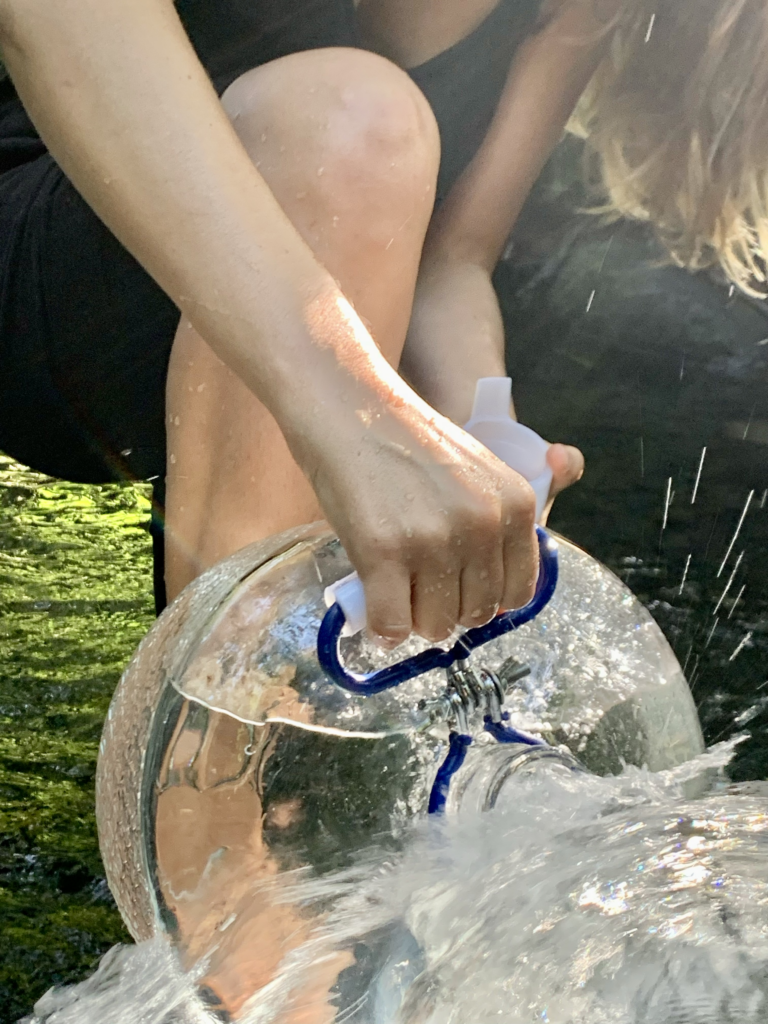
Filling 2.5 Gallon Alive Waters Jug
When you get to the spring, remember to first give back before you take. Springs are considered sacred in indigenous cultures around the world for their life giving water and also as a connection to the inner earth. A powerful and simple way to give back is to clean up. Is there any trash that needs to be collected? Could you move any dead leaves or sticks to improve the flow rate? Show up in service. Some other wonderful ways to give is with a moment of expressing verbal gratitude, singing songs to the water, offering the water an ethically sourced crystal, a feather, or some other physical gift. Flowers are a popular and beautiful thing to offer, but please be careful to source organic ones as most flowers from the store are sprayed with pesticides and can be toxic to put near a spring. Also, flowers can attract bugs as they decay, so it can be best to offer them to the flowing water directly or a little downstream from the spring head.
When gathering the water, fill the jug as close to the spring head as possible, never gather downstream. Be very careful as wet glass is extremely slippery. Make sure the lid is securely fastened. When transporting the spring water home, the jugs can sometimes slide around the car. Secure them in place or wrap them with towels or something so they don’t crash into each other.
How you store your spring water is essential. It is not pasteurized like spring water from the store, so it will start growing algae if left in direct sunlight. This is good because it means it’s alive! If the water you drink can’t even support the most basic life forms, how do you think it will support your body? Store your water in a cool, dark place such as a dark corner, pantry or closet. The fridge is ideal if you have room. Some people prefer to filter their water through a Berkey filter before drinking, but if the spring is pure, it’s not necessary. We drink our spring water completely unfiltered.
How long the water stays good for depends on how cold a temperature it’s stored at. Spring water is best fresh. We personally do not prefer to drink spring water past 2 weeks old. However, we know other people that will drink it at a month old. It’s great to get in a rhythm where you know how long the water lasts you and put your collection day on the calendar in advance.
I believe that water is calling us to reconnect with her in the deepest way, to gather our own water. Just like our ancestors did. Our ancestors didn’t have fancy water machines. They also didn’t create villages or settle where there was no water. Water was revered as the center of the community and the nodal point around which life could spiral out and take root.
Here’s to restoring the sacred connection with the waters of life.
Written by Dakota Chanel. Water Priestess and Ceremonialist. DakotaChanel.com
Do you have info you'd like to add to the main spring description or perhaps a more accurate gps coordinate?
Please start by making a comment on this spring's page with any additional info, or something that you feel should be changed to reflect more accurate data. After your comment is liked by enough community members, this will validate the improved information.
Please notify us if an update with enough likes hasn't been updated in the description yet.
Please note:
This action will also remove this member from your connections and send a report to the site admin.
Please allow a few minutes for this process to complete.

 Judith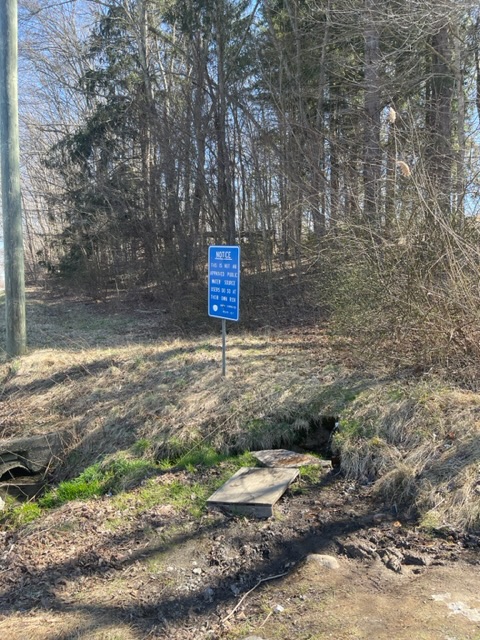

I recently came across this spring and gathered water. The sign scared me a little but I’m still going for it. Has anyone tested it recently? I would love to hear from regulars who drink this spring water!
This spring was down to a trickle in August due to lack of rain in the area but has since recovered from recent rainfall. We have been collecting and drinking water from this spring for many years and occasionally will see particulate in the water, but our feeling is that is better than drinking town tap water pumped with too much chlorine, flouride and other chemicals, plus the metals that leach in from the ancient town water pipes that deliver the tap water to the house. I have run into people at this spring who have been drinking from it for over 40 years, one person stops on his regular trip from New Jersey to Boston to collect water here. We are all still alive. It gets tested every year by someone, if it was contaminated it would be shut down.
Went to the spring on 08/28/14 and it was dry, only droplets would trickle down. We didn’t have much rain lately and the temperatures were unusually high, so my question to the old-timers is, if this is normal or this Spring is done or someone has damaged it?
Has anyone ever tested this water for Radon? Im a little concerned because a nearby house was said to have Radon in their well water.
Gathered water 1/11/13, TDS still 60-65! Truly amazing water, soft to the taste.
Gathered water yesterday 12/27/13, water is perfectly clear and the TDS came in at 60.
UPDATE: collected water 12/5/13 and no particles, just the clean, clear beautiful water we’ve grown to love. While there, another water collector told me that he’s been drinking it for over 40 years and another visitor shared that there’s a woman who regularly scrubs the pipe. Thanks!
Ironically, after passing the purity test this summer, the past 2 times we’ve gone to collect water (September and today October 12, 2013) there were quite a few brown particles floating in each of the 8 3-gallon bottles, any thoughts from site visitors? Thank you.
I’ve seen videos online explaining how the water from a Spring comes from deep within in the earth and is VERY clean. (called an aquifer)
Also, the way you know it comes from deep within the Earth, is because it will be very cold water, even when it’s quite hot outside.
I’m looking forward to collecting some of this wonderful water.
John Cleveland & Elizabeth —
THANK YOU for having the water tested and sharing your results & experiences!
It means more to me than you know! I trust my fellow human first and foremost, rather than corporations with an agenda to sell water.
This is a WONDERFUL way to heal our bodies with pure water and heal the planet by reducing our plastic usage too.
There are no manmade filters on the planet that can equal Mother Nature’s filtration system!
Blessings and unlimited good health to all of you. Hope to see you at the Spring……….
I have been very excited and interested in finding a spring to go but
unfortunately I have yet to find one in CT that hasn’t either been
closed or contains peoples comments that scare me away.
I haven’t even been able to find any clean or open springs in the surrounding states either, based on this database.
This one seems to get some good reviews, but it contains one of the favorite comments that I have read so far, that this spring is connected to a local cow pond? So does anyone from this area know if this is really true? Or is this just a ploy to keep people away from the area?
My goal in doing this is for improved health, as I would imagine is
everyone’s reason for doing this, so I would like to know that the water
that I am drinking is actually healthy.
Does anyone know of a spring that is truly clean and safe to drink from around here?
Or preferably more towards the center of CT, this one would be a really far drive for me to make every couple of weeks (although if this one is safe I will do so).
Also does anyone know of any other springs in CT that are not on this database?
Back in the early 80’s or late 70’s they did a test. They put dye in the cow pond at the top of the hill from this “spring”. A day later the water from the “spring” on 184 was flowing with green dye. Still amuses me to this day all of the people drinking the pond water from this pipe on the side of the road.
Do you really believe that story?
It was in the NL Day newspaper, so yeah I do believe.
don’t believe everything you read in the paper.
Cow pond??? I’m not aware of there being any ‘cow pond’ on the hill in question. I do know the dairy farms in the area, I use to pick up the milk from them. There is a cemetery at the top of the hill and when we go and get water here I often tease my son about the water having dead people in it.
But lets forget all this for a moment… You folks that seem so worried about the cow pond thing, let me ask you; have you ever lived in a rural community? One where you had no sewer lines or public water system? I have most of my life, and let me remind you of just what goes into the very same ground your well is/was on via that cesspool or leach field.
The Earth naturally filters the water and this is why when you have a septic system and a well they must be a certain distance from each other, so the Earth can filter the water back into the water table.
I find the dye story a bit hard to believe and even if there was a ‘cow pond’ on the top of the hill, that would mean there’s a cow farm there, too… And where do you think that farm gets it’s drinking water? I’ve known lots of dairy farmers, many of them ate bacon & eggs 7 days a week and smoked, too. Many of these guys live well into their 80s and get up early every day.
If you reallty want something to worry about just do a search on contaminated drinking water from public systems. You might also ask yourself about just how clean the pipes are that carry that water, and if there are any ‘cow ponds’ in the area… It all goes back to the Earth eventually.
We’ve been getting our water from here the past few weeks too…it’s great–much better than the bottled stuff we’ve been buying over the years in the stores 🙂
and no added fluoride!
I changed my tropical fish water ,and used this water ,they went into breeding right away.
anyone know of one closer to old saybrook though? that was a haul.
Well I am only using pH-Strips to test the water, but I did it twice and each time got a 6 – 6.5 reading. I don’t think the strips are the proper way to test pH though.
Tested PH today (8/20/10) and got a reading of 6.2. –Jason–
I too collected with my family after the video was posted. I am concerned about the pH of the water. I am only getting a reading of 5.5 which is way too acidic. Any one else pH test?
I went there today (Nov. 21, 2009). It was easy to find, thanks to your video and direction Stephen. The water is awesome. On the way home, I recalled my dad use stop by a place in North Stonington when he went fishing out there. This must be the place he was talking about. Back then I was just a little guy didn’t quite understand why he went through all that trouble when he could have had water straight from the tap. Now I understand! I’m now collecting my water in glass bottles with corks. It’s more than just getting fresh drinking water. It’s really a spiritual journey into our mother earth. By the way, Stephen Law’s cacao is pure magic too.
I love this spring. It is my main source of water.
Does anyone have recent lab data regarding the purity and safety of this spring? I ask because I have heard concerns about the nearby cemeteries, Union Cemetery up the road on 49 (higher elevation), and Brown Cemetery across the street.